Luxor Temple: History, Secrets, and the Living Heart of Ancient Thebes

Where Ancient Egypt Still Feels Alive.

For more than three thousand years, Luxor Temple has stood beside the Nile, watching empires rise and fall. Pharaohs celebrated sacred festivals here. Priests carried the gods through its towering gateways. Today, its illuminated columns still dominate the heart of Luxor, creating one of the most magical experiences in Egypt. Step inside and discover a temple where history is not forgotten—it is still alive.

What Is Luxor Temple?

Luxor Temple is famous for its colossal statues of Ramesses II, the Great Colonnade, and its role in the Opet Festival. Located in Luxor, Egypt, the temple served as a center for royal ceremonies and remains one of the best-preserved monuments from ancient Thebes.
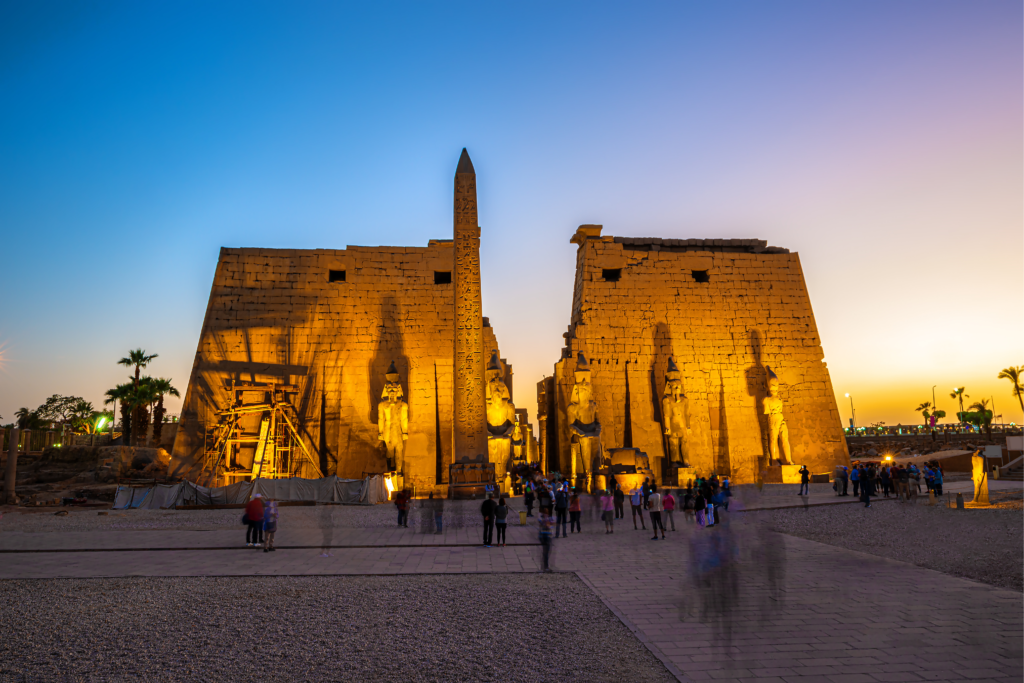
When the sun goes down over the Nile, Luxor Temple glows. Bright light washes across ancient columns as giant statues cast long shadows. Around it, the sounds of modern Luxor continue.

Over three thousand years ago, priests passed through these courtyards. Pharaohs entered to celebrate their divine power. During great festivals, thousands gathered here to honor the gods and witness sacred ceremonies.

Unlike many Egyptian temples, Luxor Temple was not built for one god. It played a special role in royal ceremonies and religious celebrations, connecting kings, gods, and people in ancient Thebes.

Today, Luxor Temple remains one of Egypt’s most beautiful monuments. Its history, architecture, and atmosphere draw travelers from around the world. The deeper you explore, the more fascinating its story becomes.

What Is Luxor Temple?
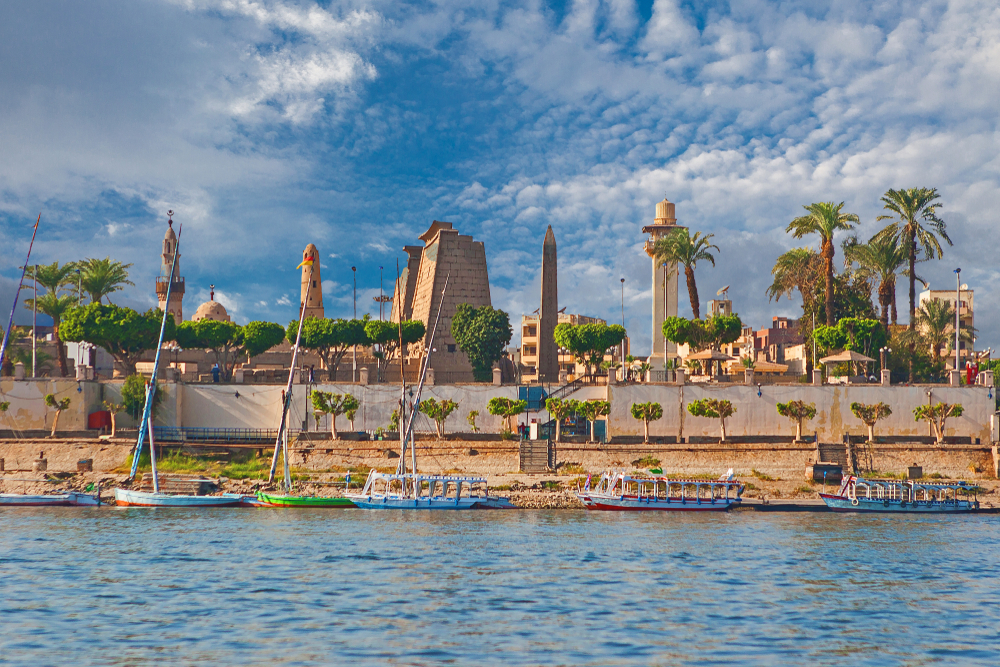
Luxor Temple is an ancient Egyptian temple located on the east bank of the Nile River in Luxor. Ancient Egyptians knew the city as Thebes, one of the most important capitals in their history.

Construction began under Amenhotep III in the 14th century BC. Later rulers expanded the temple and added monuments, making Luxor Temple one of Egypt’s most important religious centers.
 
Unlike Karnak Temple, which focused on daily worship, Luxor Temple was closely connected to royal ceremonies. Here, kings renewed their divine authority and participated in important religious festivals. Through these rituals, the temple became a lasting symbol of kingship and national unity.
Today, visitors can admire colossal statues, impressive columns, ancient reliefs, and monuments built by some of Egypt’s greatest rulers.

What Is Luxor Temple?

River Nile, Luxor, Egypt
Luxor Temple is an ancient Egyptian temple located on the east bank of the Nile River in Luxor. Ancient Egyptians knew the city as Thebes, one of the most important capitals in their history.

Construction began under Amenhotep III in the 14th century BC. Later rulers expanded the temple and added monuments, making Luxor Temple one of Egypt’s most important religious centers.

Unlike Karnak Temple, which focused on daily worship, Luxor Temple was closely connected to royal ceremonies. Here, kings renewed their divine authority and participated in important religious festivals. Through these rituals, the temple became a lasting symbol of kingship and national unity.
 
Today, visitors can admire colossal statues, impressive columns, ancient reliefs, and monuments built by some of Egypt’s greatest rulers.

Why Is Luxor Temple Famous?

Luxor Temple is famous for its architecture, majestic statues of Ramesses II, the Great Colonnade, and its role in the Opet Festival. Its unique continuous use as a place of worship includes the Abu Haggag Mosque, which is within its boundaries.

The Historical Background of Luxor Temple

The Opet Festival, Luxor temple
The story of Luxor Temple begins in the New Kingdom, ancient Egypt’s golden age. Egypt controlled vast lands and enjoyed wealth, so pharaohs invested heavily in temples and monuments showing their power and devotion.

Amenhotep III began construction around 1400 BC, building the temple’s central structure, including courtyards, sanctuaries, and ceremonial halls. He intended to create a magnificent setting for royal rituals and festivals.

Later, Tutankhamun and Horemheb added important decorations and reliefs. These carvings recorded religious ceremonies and royal activities. As a result, the temple became even more important within the religious life of Thebes.

Ramesses II transformed the entrance with colossal statues, a monumental pylon, and two obelisks. Only one remains; the other stands in Place de la Concorde, Paris.
 
Centuries later, Alexander the Great built an altar within the temple. Later, Roman rulers converted parts of it into a military center and decorated its walls with Roman art. Luxor Temple thus records the impact of different civilizations on Egypt.

What Does Luxor Temple Mean?

The modern name “Luxor” comes from the Arabic word Al-Uqsur, meaning “The Palaces.” Medieval travelers used this name because they believed the enormous ruins resembled royal palaces rather than temples.

However, ancient Egyptians called the temple Ipet Resyt, meaning “The Southern Sanctuary.” This name reflected its relationship with Karnak Temple, located farther north within ancient Thebes.

The title was appropriate because Luxor Temple played a central role during important religious festivals. In particular, it became the destination of the Opet Festival procession that connected the temple with Karnak each year.

Today, the name Luxor continues to remind visitors of the city’s remarkable concentration of ancient monuments and its status as the world’s greatest open-air museum.

Unlike many ancient Egyptian temples, Luxor Temple was not built primarily as a house for a single god. This added to its special role in royal ceremonies and religious festivals.

Luxor Temple was not built primarily as a house for a single god. Instead, it played a special role in royal ceremonies and religious festivals.
Ancient Egyptians believed pharaohs ruled by the gods’ choice, so the king had to renew his authority throughout his reign. Luxor Temple hosted these sacred rituals.

During ceremonies, priests performed rituals connecting the king to Amun-Ra, Egypt’s supreme god. These events strengthened the tie among the ruler, the gods, and the people, making Luxor Temple a symbol of kingship.

The temple’s central role in the Opet Festival brought sacred statues from Karnak each year. Ceremonies celebrated renewal, fertility, and divine power, placing Luxor Temple at the heart of religious and political life in ancient Thebes.
 
Today, visitors can still walk through the same halls where these sacred ceremonies once took place.

The Opet Festival: When the Gods Visited Luxor Temple

Every year, ancient Thebes celebrated one of the most important festivals in Egypt. This celebration was known as the Opet Festival.
The festival began at Karnak Temple, where priests placed sacred statues of Amun, Mut, and Khonsu on ceremonial boats. A grand procession then moved toward Luxor Temple along the Avenue of Sphinxes.

Musicians played drums and trumpets. Dancers performed for the crowds. Incense saturated the air, while thousands lined the route to witness the gods’ arrival.

At Luxor Temple, priests performed rituals inside the sanctuary. These renewed the king’s divine authority and celebrated Egypt’s connection with the gods.

The Opet Festival lasted days or even weeks, becoming a much-anticipated event in the Egyptian calendar.
Today, visitors walking between Karnak and Luxor Temple can still follow the same route used by priests and pharaohs thousands of years ago.

Highlights Inside Luxor Temple

Walking through Luxor Temple feels as if stepping into living history. Each monument reveals a chapter, but some highlights deserve special attention.
Colossal statues of Ramesses II

Colossal Statues of Ramesses II

The entrance of Luxor Temple is guarded by enormous statues of Ramesses II, one of Egypt’s most famous rulers.

These impressive monuments were part of a royal display meant to demonstrate the king’s power. Approaching the temple, visitors immediately sensed the significance of the ruler and the sanctuary.
Originally, six colossal statues stood ahead of the pylon. Several remain, continuing to impress visitors after three thousand years.

Nearby stands Ramesses II’s surviving obelisk. Its pair, given to France in the nineteenth century, now stands in Paris.
 
Together, these monuments form one of Luxor’s most recognizable views.
Fourteen papyrus-shaped columns forming the Great Colonnade of Luxor Temple

The Great Colonnade

Past the entrance lies one of the most beautiful features: the Great Colonnade.

This avenue has fourteen giant papyrus-shaped columns arranged in two elegant rows. Construction started with Amenhotep III and ended with Tutankhamun and Horemheb.

The columns once supported a roof that shaded processions. Their walls feature detailed carvings from the Opet Festival, offering historians important insights into ancient ceremonies.
 
Today, sun rays filtering through the columns create a breathtaking scene. The Great Colonnade is one of the most photographed spots in the temple.
Inner sanctuary of Luxor Temple

The Sanctuary and Inner Chambers

Deeper in the temple, the atmosphere grows quieter and more intimate. These inner chambers were the spiritual heart of Luxor Temple.

Only priests and the pharaoh entered the most sacred spaces. Here, they performed rituals honoring Amun-Ra and strengthening the king’s divine connection.

Several rulers modified these chambers over the centuries. Alexander the Great’s sanctuary, with its surviving reliefs, is an absorbing feature.
 
The walls here are covered with well-preserved carvings, offering valuable insights into ancient faiths and ceremonies.
Abu Haggag Mosque within Luxor Temple

Abu Haggag Mosque: A Living Layer of History

One of the most unique features of Luxor Temple is the Abu Haggag Mosque.

Unlike most sites, Luxor Temple continued as a place of worship for millennia. After ancient Egyptian religion declined, Christians used parts of it as churches, and later Muslims built the Abu Haggag Mosque atop the structure.

Thus, the temple reflects many levels of history, defined by Egyptian, Christian, and Islamic traditions.
Today, the mosque remains active and stands meters above the temple floor, as centuries of debris have once buried much of the complex.
 
This remarkable combination of ancient and modern history helps explain why Luxor Temple is often called a living sanctuary

Luxor Temple at Night: When History Glows Under the Stars

Luxor Temple illuminated at night in Luxor, Egypt
While Luxor Temple is impressive during the day, many travelers believe its real charm appears after sunset.

As night falls over the Nile, gentle lights illuminate the ancient walls, statues, and columns. The sandstone changes color throughout the evening. Golden tones become deep amber, while long shadows create a dramatic atmosphere that feels almost timeless.

Unlike many archaeological sites, Luxor Temple sits in the heart of a modern city. Visitors experience a unique contrast between ancient and modern Egypt. Outside the temple walls, cafés, shops, and busy streets fill the city with life. Inside the complex, towering monuments stand quietly below the night sky.

The Great Colonnade is especially impressive at night. Soft lighting highlights every detail of the columns and reliefs. As a result, photographers often consider this one of the most beautiful locations in Luxor after sunset.
 
Even the statues of Ramesses II appear more dramatic in the evening. Their illuminated faces seem to watch over the temple, just as they have for more than 3,000 years.
For people seeking atmosphere and unforgettable photographs, an evening visit to Luxor Temple is highly recommended.

What to Expect When Visiting Luxor Temple

Visiting Luxor Temple is easy, enjoyable, and suitable for travelers of all ages.

Most visitors begin their journey at the monumental entrance built by Ramesses II. Colossal statues and a towering obelisk immediately reveal the scale of ancient Egyptian architecture. Many travelers spend several minutes admiring the entrance before continuing inside.

Beyond the pylon, visitors enter a series of courts, colonnades, sanctuaries, and ceremonial halls. Each section reveals a different chapter of Egyptian history. The experience feels more like exploring a story than walking through a museum.

Photography opportunities are everywhere. The statues of Ramesses II, the Great Colonnade, and the Abu Haggag Mosque are particularly popular. In addition, the changing light throughout the day creates different moods across the temple.

Most travelers spend between one and two hours exploring the site. However, history lovers often stay longer to appreciate the reliefs, inscriptions, and architectural details.
 
For the best experience, visit early in the morning or late in the afternoon. Temperatures are more comfortable, and the lighting is ideal for photography.

Luxor Temple in Ancient and Modern Egypt

Few monuments demonstrate Egypt’s continuous history as clearly as Luxor Temple.

When Amenhotep III began construction in the fourteenth century BC, the temple was located at the heart of ancient Thebes. Pharaohs celebrated festivals here, priests performed sacred rituals, and people gathered during important religious events.

Over the centuries, Egypt changed dramatically. New rulers arrived. Different religions emerged. Empires emerged and fell. Nevertheless, Luxor Temple remained an important part of the landscape.

During the Roman period, soldiers occupied parts of the complex and decorated several walls with Roman artwork. Later, Christians transformed sections of the temple into a church. Afterward, the Abu Haggag Mosque was built within the ancient structure and continues to serve worshippers today.

As a result, Luxor Temple tells a story that spreads far beyond ancient Egypt. It reflects thousands of years of cultural, religious, and architectural development.

Today, the temple remains one of Luxor’s most visited landmarks. Millions of travelers come here to admire its monuments and learn about its remarkable past. At the same time, local residents continue to view it as an important part of their city’s identity.
 
This connection, the connection of past and present, makes Luxor Temple unique. It is not simply a monument preserved from history. It is a living representation of Egypt’s enduring cultural heritage.

Where Old Thebes Lives On

As the Nile flows quietly beside the city of Luxor, the historic stones of Luxor Temple continue to tell their story.
 
For more than three thousand years, pharaohs, priests, pilgrims, soldiers, and travelers have passed through its gates. They witnessed grand festivals, sacred ceremonies, and moments that shaped Egyptian history. Although civilizations emerged and fell around it, the temple endured.

Today, visitors can stand beneath the same columns, walk through the same courtyards, and admire the same monuments that inspired generations before them.

Whether you visit during the day or beneath the light of evening lights, Luxor Temple offers an experience that lasts well beyond your journey’s end.
It is more than an ancient monument.
 
It is the living heart of ancient Thebes.

FAQ

What is the Luxor Temple famous for?
Luxor Temple is famous for its colossal statues of Ramesses II, the Great Colonnade, the Opet Festival, and its function as a center of royal ceremonies in ancient Egypt.
Amenhotep III began construction of the Luxor Temple around 1400 BC. Later, Tutankhamun, Horemheb, Ramesses II, Alexander the Great, and Roman rulers expanded the complex
Luxor Temple was built to support royal ceremonies and religious festivals. It played an important role in renewing the king’s divine authority and strengthening the connection between the gods and Egypt.
Karnak Temple served as the primary religious center of ancient Thebes and was dedicated to the worship of Amun-Ra. Luxor Temple, meanwhile, played a central role in royal ceremonies and the annual Opet Festival.
Yes. Luxor Temple remains open during the evening and is considered one of the most beautiful illuminated monuments in Egypt.
Absolutely. Luxor Temple combines impressive architecture, fascinating history, and a unique atmosphere. Furthermore, its central location in modern Luxor makes it easy to include in any itinerary.

You May Be Interested