
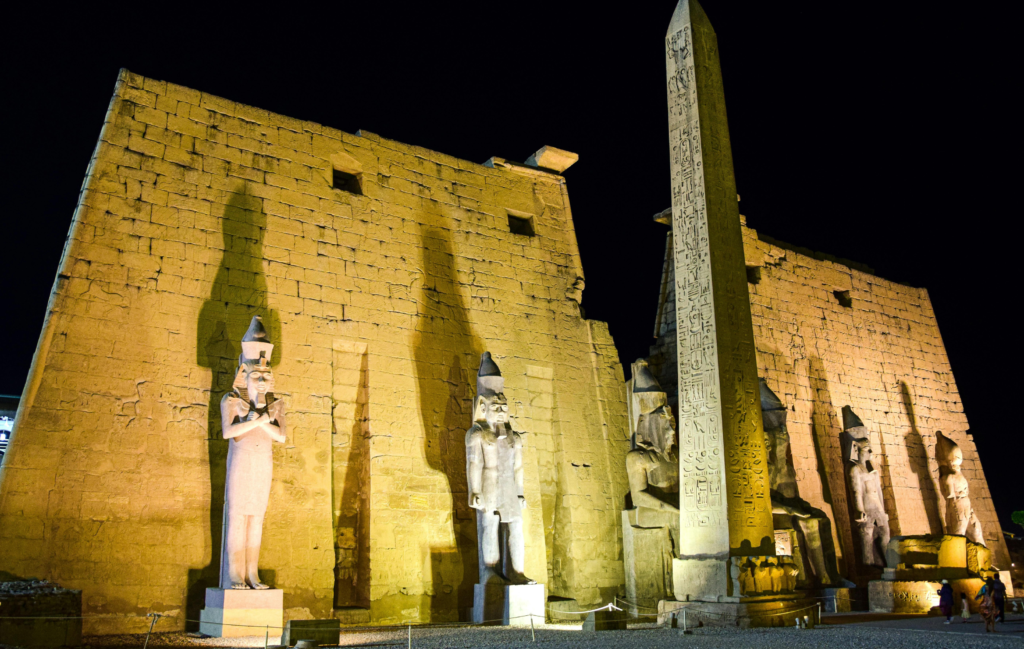
As the sun sets over the Nile, the columns of Luxor Temple glow gold. The city becomes quiet. Ancient stories seem to rise from the stones once more.
Luxor Temple is not just a ruin.
It is a living sanctuary.
Gods walked here. Kings were reborn here. Egypt’s history never stopped here.
In addition, this temple, located in the heart of Luxor, is one of the most fascinating ancient sites in Egypt.
What Is the Meaning of Luxor Temple?
The modern name Luxor comes from the Arabic word Al-Uqsur, which means “The Palaces.” When Arab travelers arrived, they believed the ruins were royal palaces.
In ancient Egypt, Luxor Temple was called Ipet-Resyt, meaning “The Southern Sanctuary.” It was a sacred place where divine power and kingship were renewed.
Where is the Luxor Temple located?
Luxor Temple is located on the East Bank of Luxor, beside the Nile Corniche. It stands in the city center, close to hotels, markets, and restaurants.
In addition, the temple was connected to Karnak Temple by the Avenue of Sphinxes, a ceremonial road used during festivals.
The History of Luxor Temple.
Construction of Luxor Temple began around 1400 BC during the reign of Amenhotep III. Later, Ramses II added a grand entrance, statues, and a large courtyard.
Over time, the temple was never abandoned. The Romans used it as a fortress and church. Later, the Abu Haggag Mosque was built within the temple and remains active today.
Therefore, Luxor Temple shows layers of Pharaonic, Roman, Christian, and Islamic history in one place.
The Significance of Luxor Temple.
Luxor Temple was a temple of renewal and kingship. Pharaohs came here to confirm their divine right to rule.
Unlike many temples linked to death, Luxor Temple celebrated life, power, and continuity. It was the spiritual heart of ancient Thebes.
The Opet Festival.
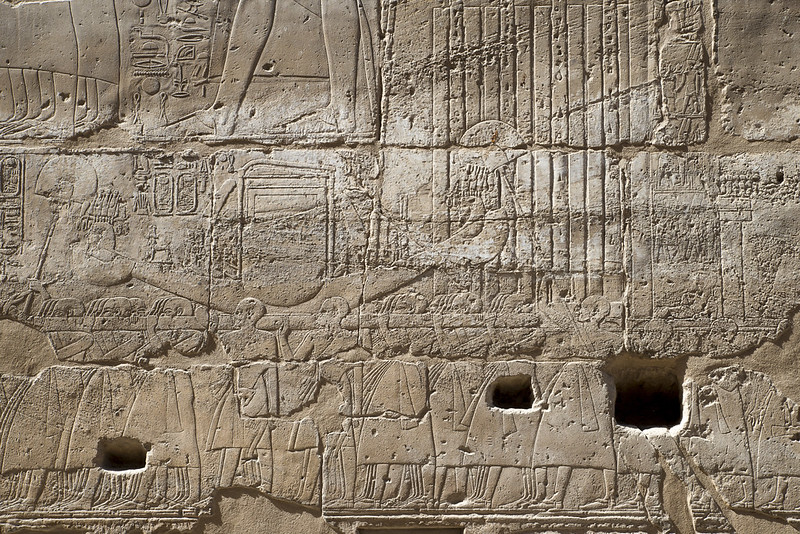
One of the most important celebrations in ancient Egypt was the Opet Festival.
Every year, statues of Amun, Mut, and Khonsu traveled from Karnak Temple to Luxor Temple. Priests, musicians, and people joined the procession.
The festival symbolized the pharaoh’s rebirth. Egyptians believed the king received divine energy during this event. As a result, it was a time of joy, feasting, and national celebration.
Highlights Inside Luxor Temple
Colossal Statues of Ramses II
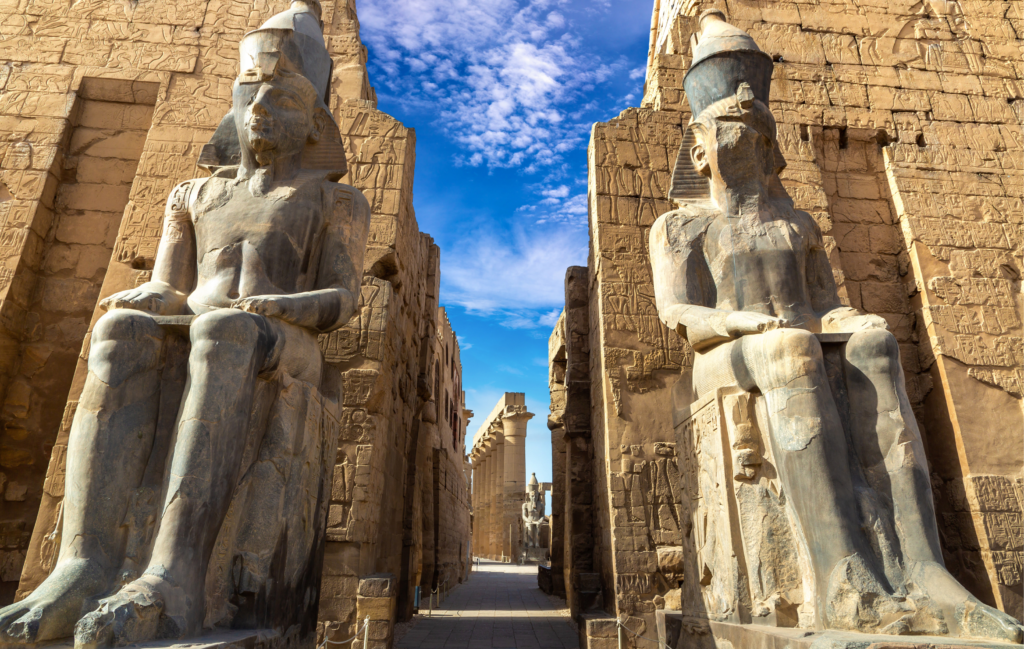
At the entrance, you will see giant statues of Ramses II and a tall obelisk. Another obelisk once stood here and is now in Paris.
The Great Colonnade.
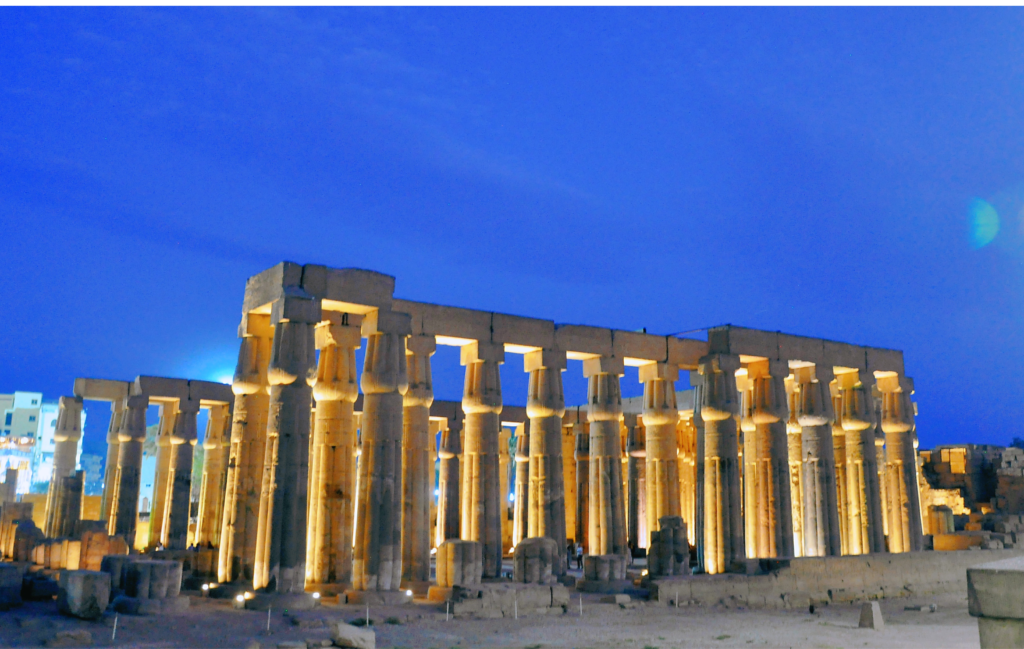
The colonnade built by Amenhotep III features massive papyrus-shaped columns. At sunset, they turn golden and stunning.
The Sacred Sanctuary.
Inside the temple, the sanctuary of Amun-Ra was used for sacred rituals and royal ceremonies.
Abu Haggag Mosque.
This mosque was built on ancient ruins. It shows how the temple remained a spiritual center for thousands of years.
King Tutankhamun and Luxor Temple.
King Tutankhamun also left his mark on Luxor Temple. After Akhenaten’s religious revolution, Tut restored worship to Amun.
His name appears on reliefs inside the temple, where he is shown offering gifts to the gods. Therefore, Luxor Temple is linked to both great kings and the famous boy king.
Luxor Temple at Night.
Luxor Temple is one of the few temples in Egypt open at night. Soft lights illuminate the columns and statues. The atmosphere feels magical and cinematic.
Many travelers say that visiting Luxor Temple at night is unforgettable.
Luxor Temple in Ancient and Modern Egypt
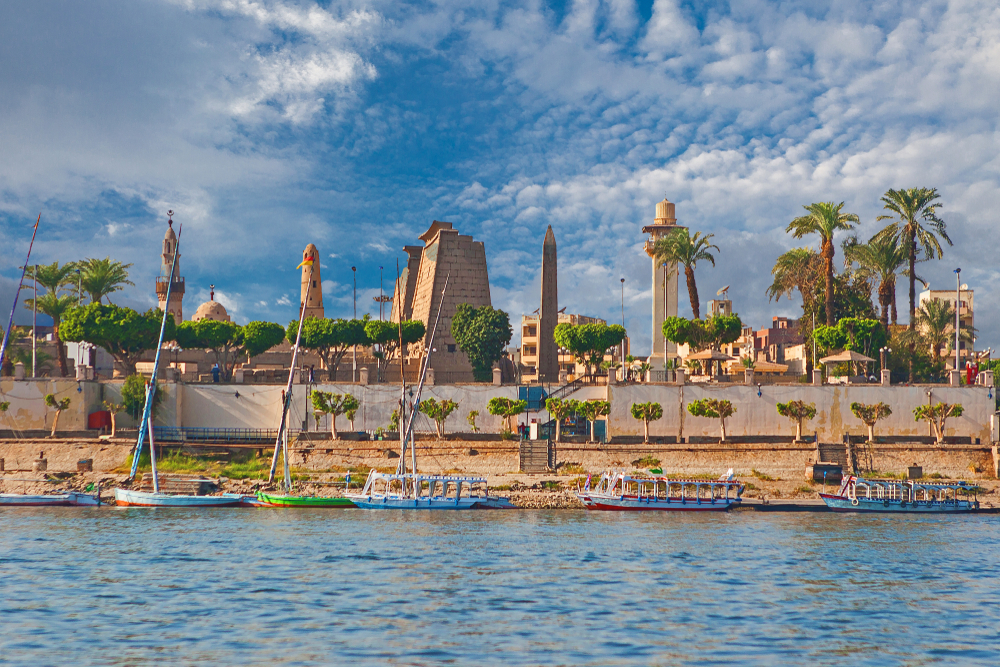
For more than 3,000 years, Luxor Temple has been a center of faith and power. From ancient festivals to modern tourism, the temple has never lost its importance.
Today, it connects ancient Thebes with modern Luxor. It is a living chapter of Egypt’s story.