Where Every Column Tells a Story

What if a single temple could reveal the rise of kings, the power of gods, and the ambitions of an empire that lasted thousands of years?

As the morning sun rises above Luxor, the towering columns of Karnak Temple glow golden against the desert sky. Priests once walked these sacred halls carrying offerings to Amun-Ra. Pharaohs celebrated victories beneath colossal gateways. Great festivals filled the avenues with music, incense, and thousands of worshippers.

Today, the temple remains one of the most extraordinary monuments in the world. Yet Karnak is more than a collection of ancient stones. It is a city built for the gods, a masterpiece shaped by generations of rulers, and a place where every wall preserves a chapter of Egypt’s remarkable story.

The deeper you walk into Karnak, the more you realize that this is not simply a temple—it is ancient Egypt itself, written in stone.

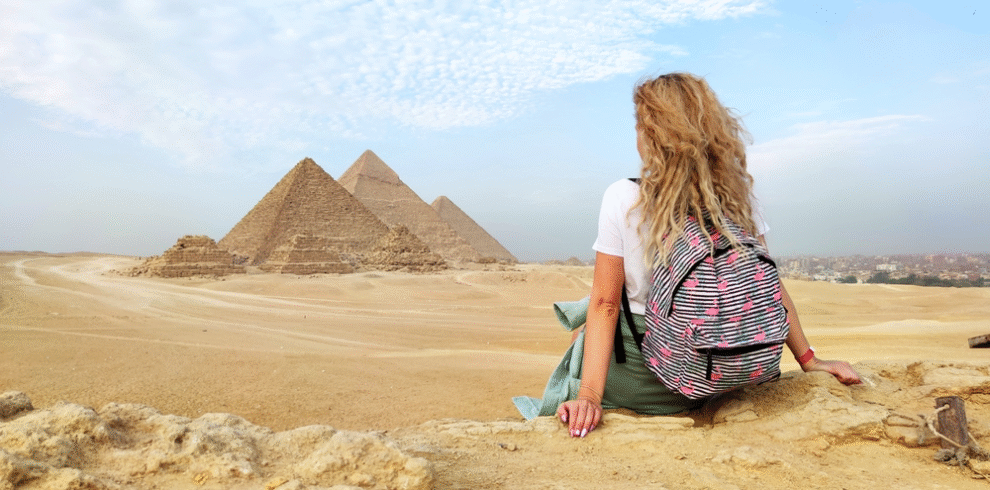
Sunrise over Karnak Temple in Luxor

What Is Karnak Temple?

Karnak Temple is the largest religious complex ever built in ancient Egypt. Located in Luxor on the east bank of the Nile River, it was dedicated primarily to Amun-Ra, the king of the gods. Construction began around 2000 BC and continued for more than two thousand years, creating a vast complex of temples, pylons, obelisks, sanctuaries, and sacred lakes that served as the spiritual center of ancient Thebes.

Table of Contents

The Historical Background of Karnak Temple

The story of Karnak begins around 2000 BC during Egypt’s Middle Kingdom. At that time, Thebes was emerging as an important political and religious center. Early rulers constructed modest shrines dedicated to local deities, particularly Amun, who would later become the most powerful god in Egypt.
 
As Egypt entered the New Kingdom, the country’s wealth and influence expanded dramatically. Military victories, international trade, and tribute from conquered territories brought the kingdom enormous resources. Consequently, pharaohs invested heavily in monumental construction projects, and Karnak became the focus of their ambitions.
Kings such as Senusret I, Hatshepsut, Thutmose III, Seti I, and Ramesses II all left their mark on the temple. Rather than replacing older structures, they expanded around them. As a result, Karnak evolved into a living architectural record of Egyptian history spanning more than twenty centuries.
 
Even after the age of the pharaohs ended, Greek and Roman rulers continued to build and restore parts of the complex. Therefore, Karnak preserves a unique timeline of religious and political development, unlike any other site in Egypt.
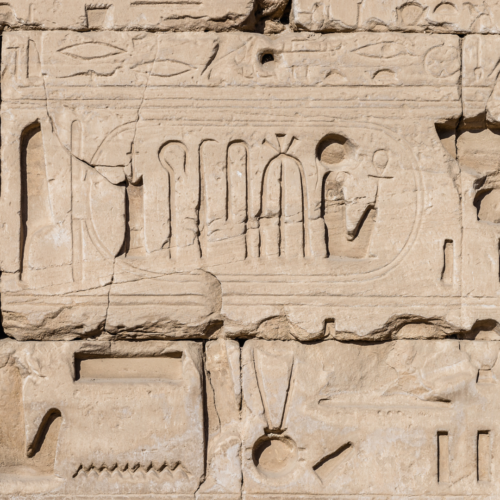
Ancient reliefs showing pharaohs who expanded Karnak Temple

What Does Karnak Mean?

The modern name “Karnak” comes from the Arabic word Al-Karnak, meaning “fortified village.” Medieval travelers who encountered the enormous ruins believed they resembled a fortified settlement.

However, the ancient Egyptians called the site Ipet-Sut, meaning “The Most Select of Places.” This sacred name reflected the temple’s importance as one of the holiest locations in Egypt. Ancient priests believed the complex was the earthly residence of the gods and the center of divine power within the kingdom.

The name perfectly captures the atmosphere visitors still experience today. Despite centuries of change, Karnak continues to inspire awe through its scale, beauty, and historical significance.

What God Was Worshipped at Karnak Temple?

The principal deity worshipped at Karnak Temple was Amun-Ra, the king of the gods and protector of Egypt. Originally a local god of Thebes, Amun’s influence grew as the city became Egypt’s capital. Eventually, priests combined him with the sun god Ra, creating the supreme deity Amun-Ra.
The largest section of Karnak, known as the Precinct of Amun-Ra, was dedicated to his worship. Every day, priests performed rituals that included prayers, offerings, purification ceremonies, and sacred hymns to maintain harmony between the gods and humanity.
Karnak also honored other important deities. The goddess Mut represented motherhood and royal authority, while Khonsu served as the moon god and protector of travelers. Together, these gods formed the famous Theban Triad, worshipped throughout ancient Thebes.

Why Was Karnak Temple Built?

Ancient Egyptians believed that the gods actively influenced the world around them. Therefore, maintaining a strong relationship with divine powers was essential for prosperity, stability, and cosmic balance.
 
Karnak Temple was built as the earthly residence of these gods. Priests performed daily rituals inside their sanctuaries, while pharaohs sponsored construction projects to demonstrate their devotion and secure divine favor. Every monument served both religious and political purposes.
 
The temple also symbolized Ma’at, the Egyptian principle of truth, balance, and order. Through ceremonies conducted at Karnak, Egyptians believed they could preserve harmony within the universe and ensure the continued success of their kingdom.

The Pharaohs Who Built Karnak Temple

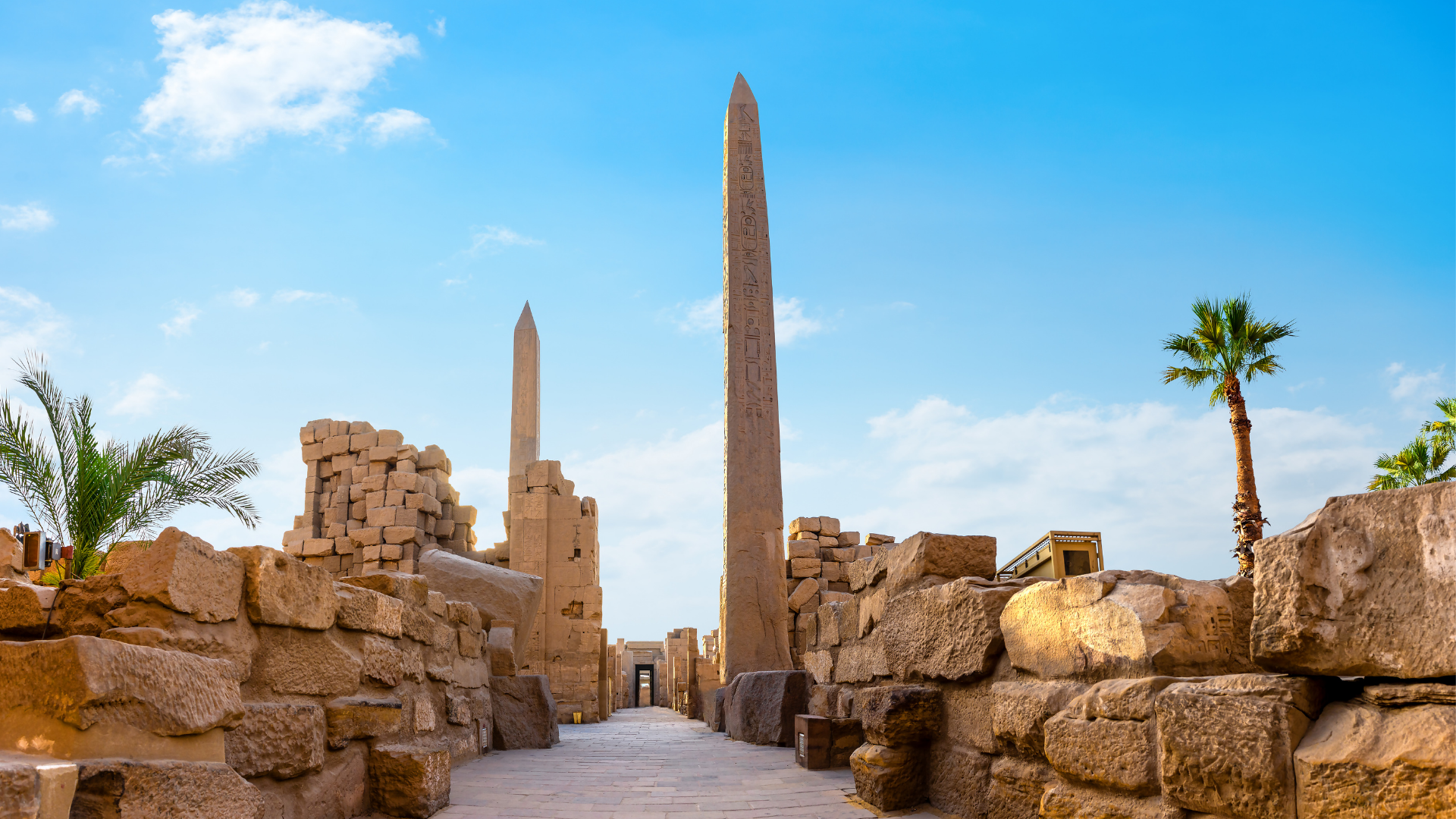
Obelisk of Queen Hatshepsut. Karnak temple
One of Karnak’s most remarkable characteristics is that it was not the achievement of a single ruler. Instead, dozens of pharaohs contributed to its expansion over more than two thousand years.
Queen Hatshepsut erected magnificent granite obelisks that remain among the tallest in Egypt today. Thutmose III, often called the “Napoleon of Ancient Egypt,” expanded the temple after creating a vast empire through military campaigns. Later, Seti I and Ramesses II constructed and decorated the Great Hypostyle Hall, one of the most impressive architectural achievements of the ancient world.
Because each ruler added new structures, Karnak became a timeline carved in stone. Visitors can literally walk through centuries of Egyptian history as they explore the complex.
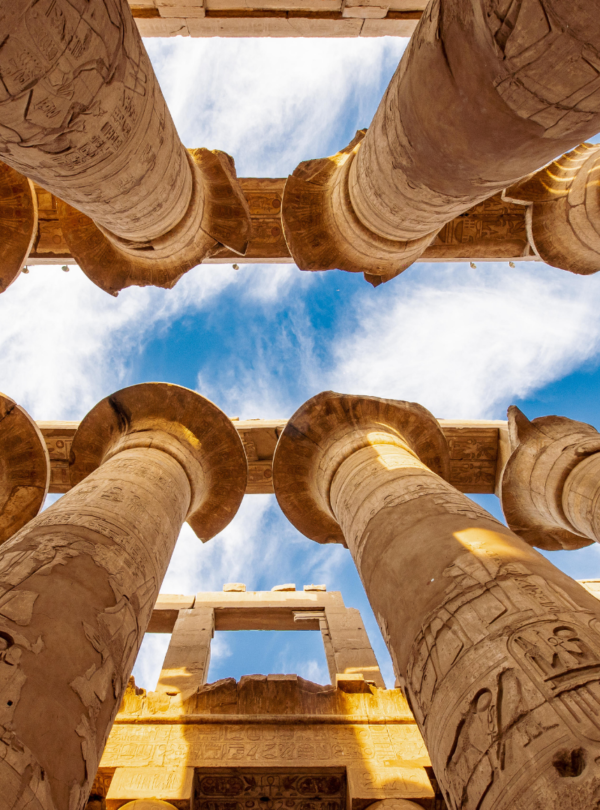
Massive columns inside the Great Hypostyle Hall at Karnak Temple

The Great Hypostyle Hall: Egypt's Forest of Stone

For many visitors, the Great Hypostyle Hall is the highlight of Karnak Temple. The hall contains 134 massive sandstone columns arranged in sixteen rows, creating one of the largest columned spaces ever built.

The central columns rise more than twenty-one meters high and are decorated with detailed hieroglyphic inscriptions. Ancient artists originally painted these carvings in vibrant colors, and traces of red, blue, and green can still be seen today.

According to Egyptian religious beliefs, the columns symbolized papyrus plants emerging from the waters of creation. Consequently, the hall represented the beginning of life itself. Walking among these towering monuments remains one of the most unforgettable experiences in Egypt.

Hatshepsut's Obelisks and the Sacred Lake

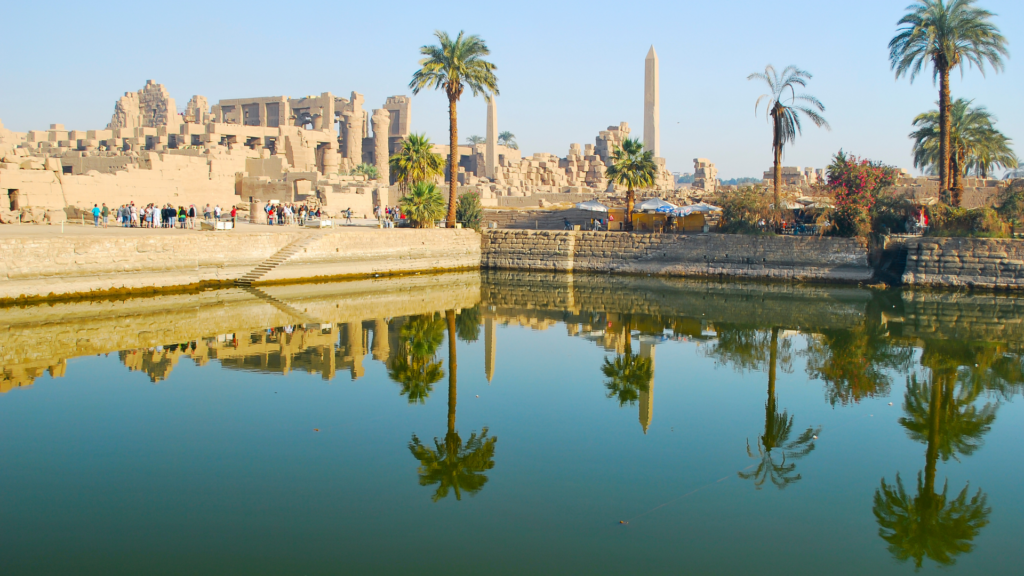
Sacred Lake reflecting monuments inside Karnak Temple
Among Karnak’s most famous monuments are the obelisks commissioned by Queen Hatshepsut. Carved from red granite quarried in Aswan, these towering structures symbolized the sun’s rays and celebrated the queen’s devotion to Amun-Ra.

Nearby lies the Sacred Lake, one of the temple’s most peaceful locations. Priests used the lake for ritual purification before conducting ceremonies inside the sanctuary. Ancient Egyptians also associated their waters with the primordial ocean from which creation emerged.
Today, the lake offers visitors a tranquil contrast to the monumental architecture surrounding it.

The Festival Hall of Thutmose III

Deep within the complex stands the Festival Hall of Thutmose III, known as the Akh-Menu. Built to celebrate royal achievements and religious festivals, the hall demonstrates the wealth and power of one of Egypt’s greatest rulers.

One of its most fascinating features is the botanical room. Here, artists carved detailed representations of plants, flowers, birds, and animals encountered during Thutmose III’s military campaigns. These reliefs are considered among the earliest scientific illustrations in human history.

The Avenue of Sphinxes and the Opet Festival

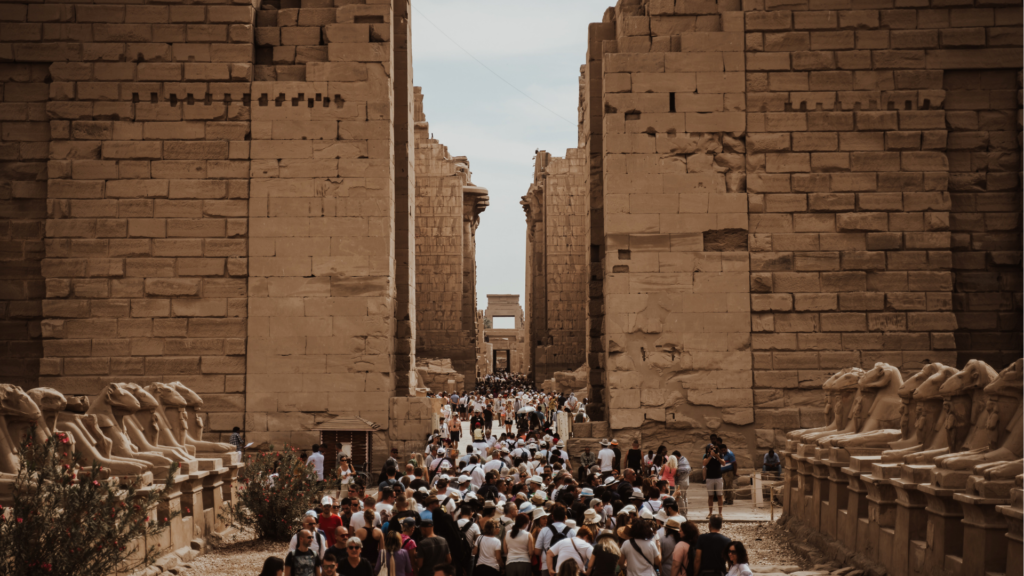
The famous Avenue of Sphinxes connected Karnak Temple to Luxor Temple over a distance of nearly three kilometers. Lined with hundreds of sphinx statues, this ceremonial road served as the route for major religious processions.

The most important celebration was the Opet Festival. During this annual event, the sacred statues of Amun, Mut, and Khonsu were transported between the two temples, while priests, musicians, officials, and citizens participated in grand ceremonies.
 
The festival renewed the king’s divine authority and strengthened the bond between the gods and the people of Egypt.

What to Expect When Visiting Karnak Temple

Visitors exploring Karnak Temple in Luxor, Egypt
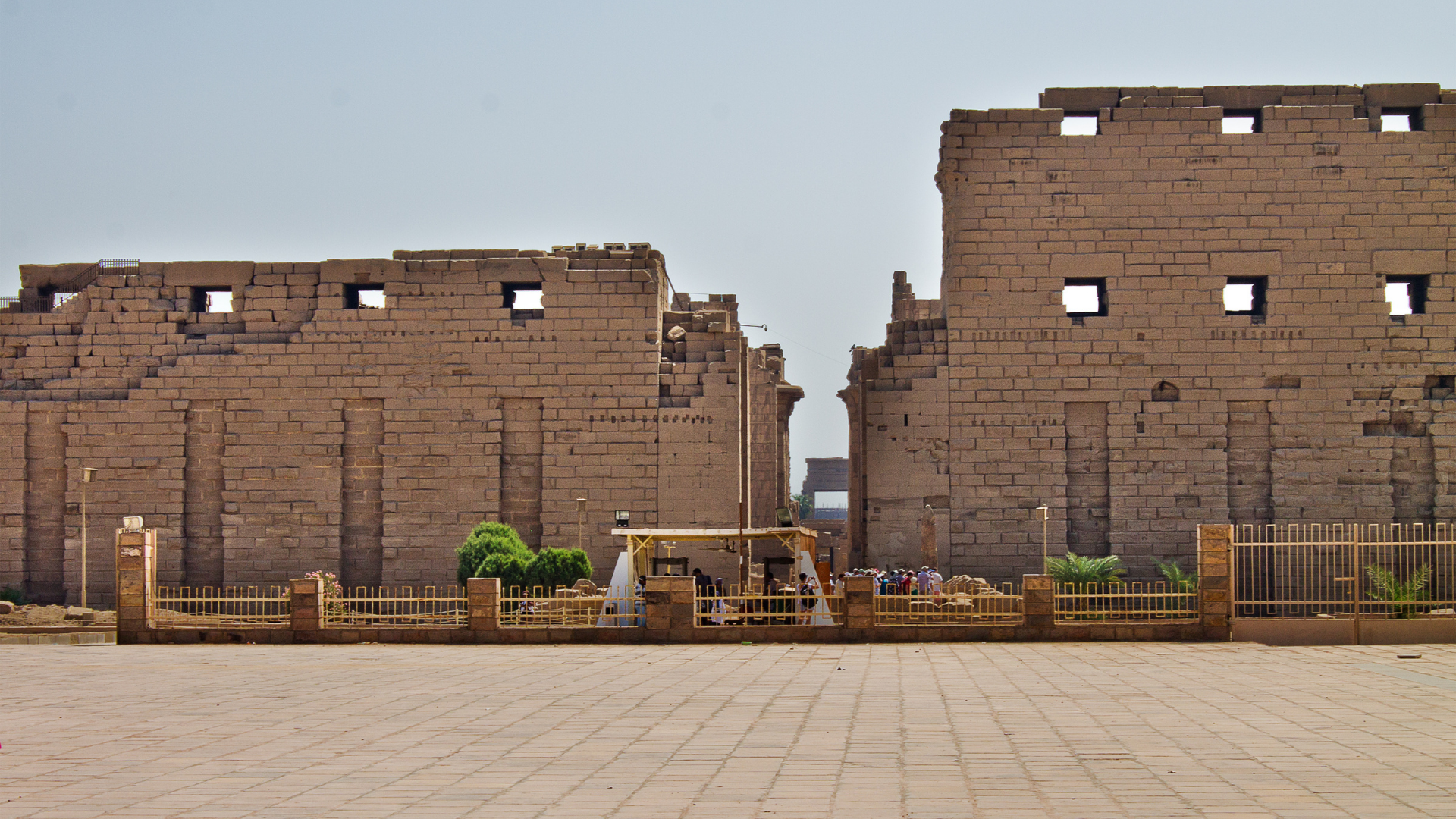
Visitors enter Karnak through the monumental First Pylon, then explore a series of courts, halls, sanctuaries, and sacred spaces. The experience feels less like visiting a single monument and more like walking through an ancient city.
Most travelers spend two to three hours exploring the site. However, history enthusiasts often linger to appreciate the details hidden in the carvings and architecture. Early morning and late afternoon provide the best lighting for photography and more comfortable temperatures.
The Sound and Light Show offers another perspective on the temple, using narration and illumination to bring thousands of years of history to life after sunset.
 

Why Karnak Temple Is Worth Visiting

Karnak Temple is much more than a collection of ancient ruins. It is a journey through the history, religion, and achievements of one of humanity’s greatest civilizations.

Its colossal columns, towering obelisks, sacred lake, and beautifully carved inscriptions reveal the ambitions of kings who sought immortality and the beliefs of a society deeply connected to its gods. At the same time, the scale of the architecture continues to amaze modern visitors just as it impressed pilgrims thousands of years ago.

Whether you are passionate about history, photography, architecture, or culture, Karnak Temple offers an unforgettable experience that belongs on every Luxor itinerary.
 

FQAS

What is Karnak Temple famous for?

Karnak Temple is famous for being the largest religious complex ever built in ancient Egypt and for containing the Great Hypostyle Hall with 134 giant columns.

The principal deity worshipped at Karnak Temple was Amun-Ra, the king of the gods.

The temple was built as a sacred residence for the gods and as a center for religious ceremonies performed by priests and pharaohs.

The earliest structures date to around 2000 BC, and construction continued for more than two thousand years.

Yes. Karnak Temple is one of Egypt’s most impressive archaeological sites and a highlight of any visit to Luxor.

Leave a Reply

Your email address will not be published. Required fields are marked *