In the middle of the Nile, there is an island where a goddess searched for love, a temple escaped the flood, and history rose again from the water.

Philae Temple Aswan: The Island of Isis, Its History, and the Story of Its Rescue

“Philae Temple, Aswan, is a historic temple dedicated to the goddess Isis. It is located on Agilkia Island in the Nile River near Aswan. The temple is famous for its island setting, the legend of Isis and Osiris, and its UNESCO relocation project, which saved it from flooding after the construction of the Aswan High Dam.”

The Nile may seem calm, but Philae Temple soon emerges from the water, its elegant columns creating an almost unreal scene. More than an ancient site, Philae blends myth, history, and survival. Travelers have long called this island one of the most beautiful and spiritual places on the Nile.

More profoundly, this temple is woven into the hearts of Isis and Osiris’s story. Their legend breathes life into each wall and carving, igniting emotion and wonder. Visiting Philae becomes a journey through history and an experience of the temple’s emotional and symbolic soul, inviting visitors to feel the ancient story echo within them.

The Meaning of Philae: The Sacred Island of Isis
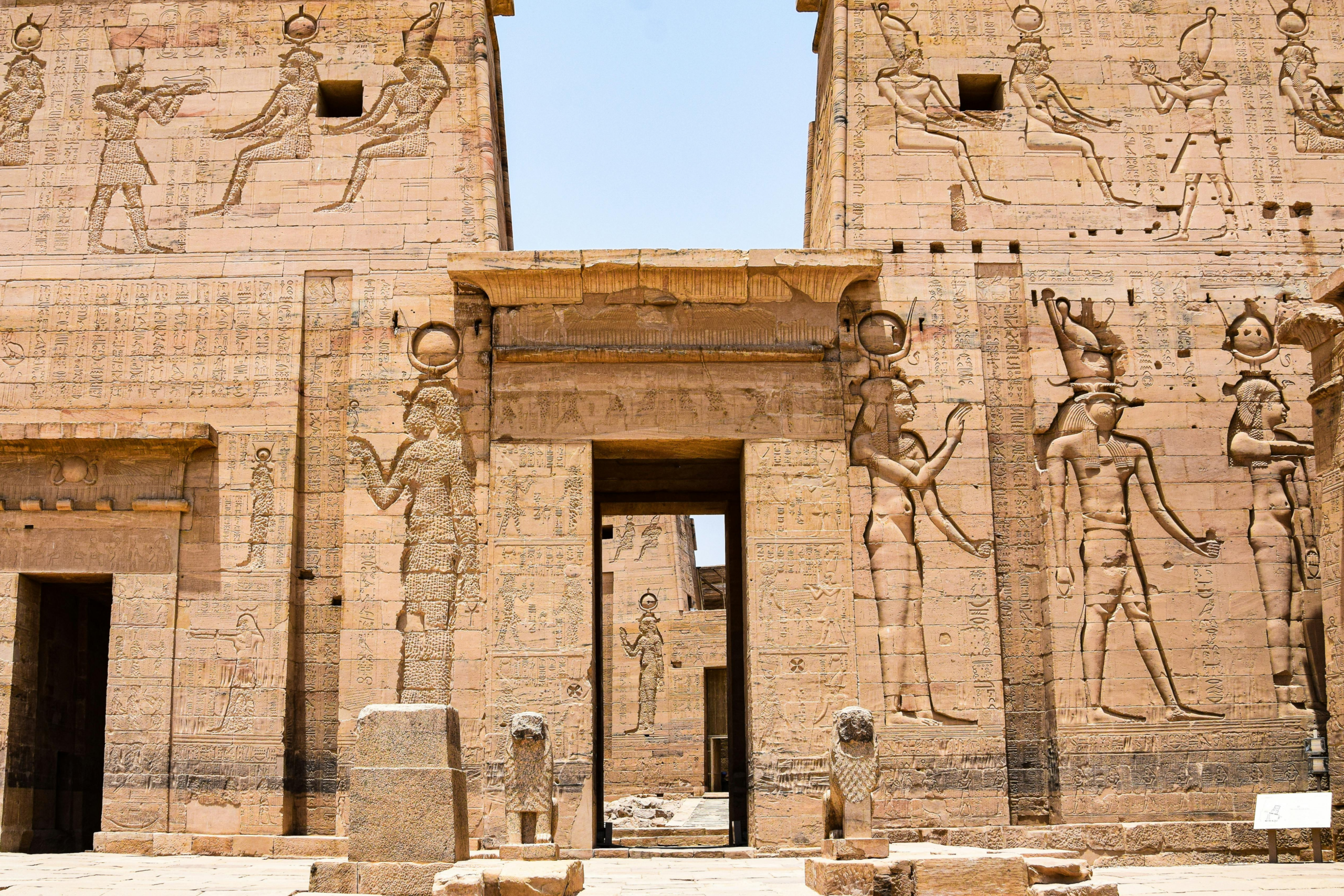
Sacred island of Philae dedicated to the goddess Isis
The name “Philae” carries layers of meaning that reflect both language and belief. It is often linked to the idea of “the end” or “the remote place” in ancient Egyptian understanding, while in Greek it was interpreted as “the beloved island.” However, beyond translation, the true meaning of Philae was always spiritual. This island was considered sacred long before the temple was built, and many ancient Egyptians believed it was one of Osiris’s burial places.
 
The island’s connection to Isis, goddess of love and magic, made it a sacred home and pilgrimage center. Priests and worshippers honored her here, and the peaceful setting still feels like a spiritual sanctuary.

The History of Philae Temple: From Ancient Egypt to the Roman Era
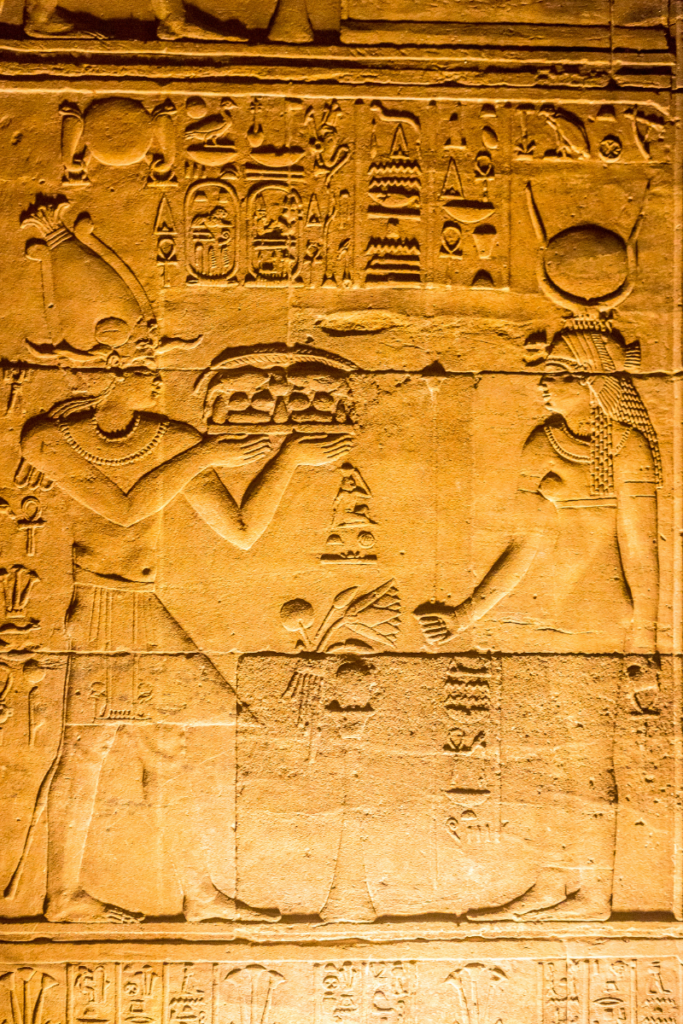
Ancient carvings inside Philae Temple in Aswan Egypt
The history of the Philae Temple is rich and complex, reflecting several important periods of Egyptian civilization. After construction began during the Ptolemaic period, especially under rulers like Ptolemy II, the site continued to develop as later rulers added new buildings and artistic details.

Building on these developments, the Roman period saw emperors such as Trajan and Hadrian expand the complex. As a result, the temple today reflects a unique blend of Egyptian and Roman architectural styles, with reliefs depicting traditional Egyptian gods alongside Roman rulers. This makes Philae one of the most culturally layered temples in Egypt.

Adding to its layered history, Philae became one of the last places where ancient Egyptian religion was practiced. While Christianity was spreading across the country, worship of Isis remained active here for centuries. Eventually, during the Byzantine period, the temple was closed, marking the end of an ancient tradition. However, its walls still preserve the memory of that long and fascinating history.


The Protection of Philae Temple: A Story of Rescue

For many centuries, the Philae Temple stood peacefully on its original island. This tranquility changed dramatically in the 20th century after the construction of the Aswan High Dam, when rising water levels flooded the temple for most of the year, causing serious damage to its structure and decorations.
 
Faced with this urgent situation, an international rescue mission was launched to save this extraordinary site. With UNESCO’s support, experts worked together to carefully dismantle the temple and move it to a safer location. The new site, Agilkia Island, was designed to closely resemble the original setting.
 
Following the successful move, stone by stone, the entire complex was rebuilt. This project became one of the greatest examples of global cooperation in protecting cultural heritage. Today, when you walk through Philae, you are not only seeing an ancient temple but also witnessing a powerful story of preservation and human effort.

Where Is Philae Temple Located?

Philae Temple is located in southern Egypt, near the beautiful city of Aswan. Unlike many other temples, it is not built on the mainland. Instead, it stands on Agilkia Island, surrounded by the waters of the Nile, which gives it a unique and peaceful character.
To reach the temple, visitors take a short boat ride from the marina. This journey is an essential part of the experience. As you move across the Nile, the temple slowly appears in front of you, creating a moment of anticipation and wonder. Additionally, Philae is included in most Aswan tours and Nile cruise itineraries, making it one of the easiest and most rewarding sites to visit in the region.

Philae Temple or Abu Simbel Temples: Which Should You Visit?

Comparison between Philae Temple and Abu Simbel in Egypt
Choosing between visiting Philae Temple and Abu Simbel depends on what you seek from your experience, as each site offers distinct qualities.
Philae Temple is known for its beauty and peaceful atmosphere. It sits on a small island and offers a strong emotional connection through the story of Isis and Osiris. Because of this, many visitors feel a sense of calm and reflection during their visit.

In contrast, Abu Simbel is famous for its massive scale and dramatic setting. The giant statues of Ramesses II create a powerful and unforgettable impression, and their remote location adds a sense of adventure.
 
Therefore, if you are looking for a quiet and spiritual experience, Philae is the perfect choice. On the other hand, if you prefer monumental architecture and iconic views, Abu Simbel may be a better choice. Ideally, visiting both sites will give you a complete understanding of ancient Egypt’s greatness.

What Travelers Say About Philae Temple
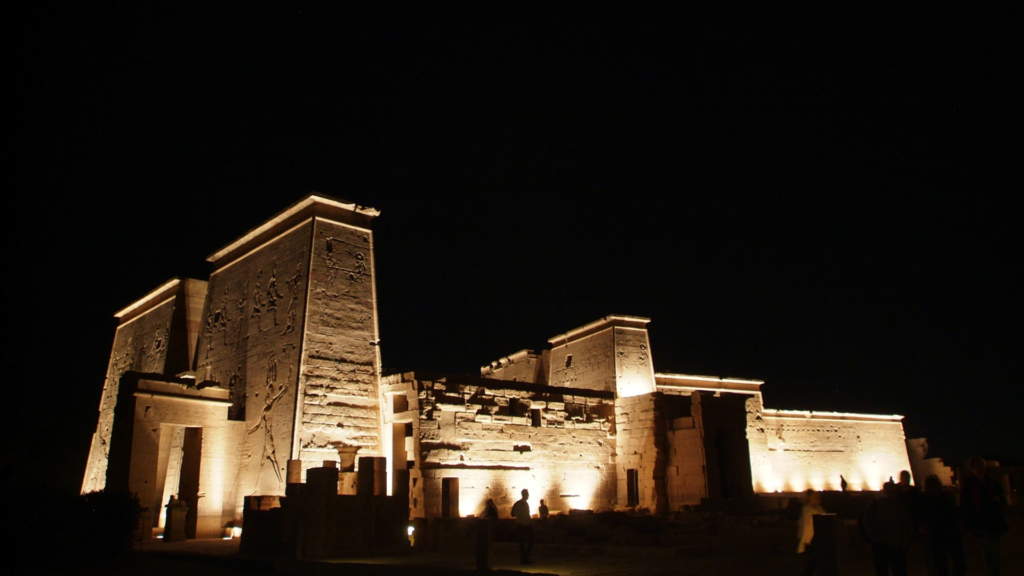
Philae Temple is memorable, offering peace and balance rarely found elsewhere. Visitors often linger to soak in the atmosphere.

In addition, the boat ride to the temple is frequently mentioned as a highlight. Watching the temple appear slowly on the horizon creates a magical first impression. Others point out the beauty of the reflections on the Nile, which make Philae one of the best photography locations in Aswan.
 
Most importantly, many travelers say that Philae feels different. It is not only about history; instead, it creates an emotional connection that lasts long after visitors leave, making it a must-visit destination in southern Egypt.
Philae Temple, Aswan, on Agilkia Island during sunset

Why Philae Temple Is Worth Visiting

Philae stands out, combining beauty, mythology, and history in a unique setting. Unlike desert temples, it rises from the Nile, creating a peaceful atmosphere.
Moreover, the connection to the story of Isis adds a deeper meaning to the visit. When you walk through the temple, you are not just observing ancient stones; you are stepping into a story that has been told for thousands of years. Because of this, Philae is more than just a historical site. It is a place where past and present come together in a powerful way.

Final Thoughts

In the end, Philae Temple in Aswan is not just a stop on your itinerary. Rather, it is a journey into one of the most meaningful stories of ancient Egypt. From its sacred origins and rich history to its incredible rescue, every part of its story adds depth to your experience.
 
Include Philae on your Aswan trip. You’ll see why it has remained a beloved Egyptian treasure for thousands of years.

FQAS

What is Philae temple Famous for?

Philae Temple is famous for being the sacred temple of the goddess Isis, one of the most important deities in ancient Egyptian religion. The temple is also known for its stunning island setting in the Nile near Aswan and for its remarkable rescue by UNESCO, which relocated the entire complex to protect it from flooding. Today, it is considered one of Egypt’s most beautiful and romantic ancient sites.

Philae Temple is located on Agilkia Island, a small island in the Nile River near the city of Aswan in southern Egypt. Visitors reach the temple by a short motorboat ride, making the journey part of the experience. Its unique location surrounded by water creates one of the most picturesque settings among Egypt’s ancient monuments.

Philae Temple was moved to save it from rising Nile waters caused by the construction of the Aswan High Dam. During the 1960s and 1970s, an international campaign led by UNESCO carefully dismantled the temple into thousands of stone blocks and reconstructed it on nearby Agilkia Island. This project remains one of the world’s greatest archaeological preservation achievements.

Absolutely. Philae Temple combines history, mythology, architecture, and natural beauty in one unforgettable destination. Visitors can explore magnificent ancient carvings, learn about the legend of Isis and Osiris, enjoy a scenic boat ride on the Nile, and experience one of Egypt’s most atmospheric temples. For many travelers, it is one of the highlights of visiting Aswan.

o visit Philae Temple, take a short motorboat ride from the marina near Aswan to Agilkia Island, where the temple is located. Visitors can explore the site independently, join a guided tour, or visit as part of a Nile cruise itinerary. Early morning and late afternoon are the best times to enjoy the temple’s beauty and avoid the midday heat.

Yes, visitors can explore Philae Temple independently. However, hiring a guide or joining a guided tour can greatly enhance the experience. A knowledgeable guide can explain the mythology, historical events, and architectural details hidden within the carvings, helping bring the temple’s fascinating story to life.