
Luxor: Where the Sunrise Meets Eternity
If Egypt is a story carved in stone, then Luxor is the chapter that glows the brightest. For anyone planning a visit, this Luxor travel guide will reveal why it is a city where the Nile flows like a silver ribbon, dividing life into two different worlds: the East Bank, alive with sunlight, temples, and movement, and the West Bank, quiet and eternal, where the ancient Egyptians believed the sun slept with the pharaohs. Luxor is not a place you visit—it is a dream you walk through, a dream where the ancient world still breathes in every sunrise and every fading light over the desert cliffs.
This Luxor travel guide is designed to help travelers explore temples, tombs, Nile cruises, and the most unforgettable experiences in Luxor, Egypt
What Is Better, Luxor or Cairo? A Tale of Two Egyptian Worlds
Many travelers ask, “Is Luxor better than Cairo?”
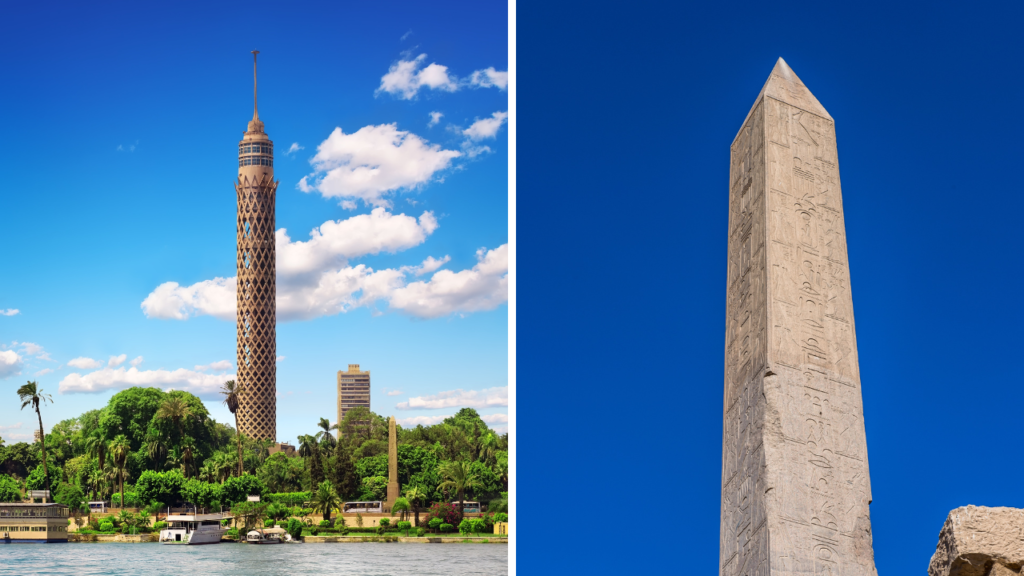
Both cities are extraordinary, but each shines in its own way. Cairo is the heartbeat of Egypt—energetic, modern, colorful, and alive from dawn until the deep hours of the night. It is the city of a thousand minarets, bustling markets, world-class museums, and the legendary Giza Pyramids. Luxor, in contrast, is the soul—quiet, golden, timeless, wrapped in ancient stories that rise from the riverbanks and echo across the desert. If Egypt were a book, Cairo would be the introduction, and Luxor would be the chapter everyone remembers.
The Beauty of Luxor: A City Divided by the Nile
To understand Luxor, close your eyes and step into the past. On the East Bank, picture farmers waking at sunrise, guiding oxen through fertile farmland, while priests burn incense as they enter towering temples dedicated to Amun, Mut, and Khonsu. Sculptors carve their names into stone, children run through lively markets, and boats crowd the river’s edge, carrying goods and stories between villages. Then cross the Nile in your imagination. The West Bank is silent—a sacred world of mountains and tombs. Here, men carved deep chambers into limestone cliffs by torchlight, painted the journey of the afterlife on the walls, and prepared pharaohs for eternity. Two worlds, one city, forever connected by the river that protected life and guided death.
Luxor: The East Bank—The Land of Sunrise and Life
Stand on the East Bank at dawn, and you feel Luxor waking beneath your feet. The sun spills across the river and touches the temples with a warm, golden glow. Boats glide silently across the water as the city begins its day, just as it did thousands of years ago.
Karnak Temple rises like a city of its own. Walking through the Great Hypostyle Hall feels like wandering through a stone forest, its 134 towering columns painted with colors that still cling to life. The sacred lake reflects the sky, and every courtyard tells stories of pharaohs, gods, and rituals once performed in powerful silence.
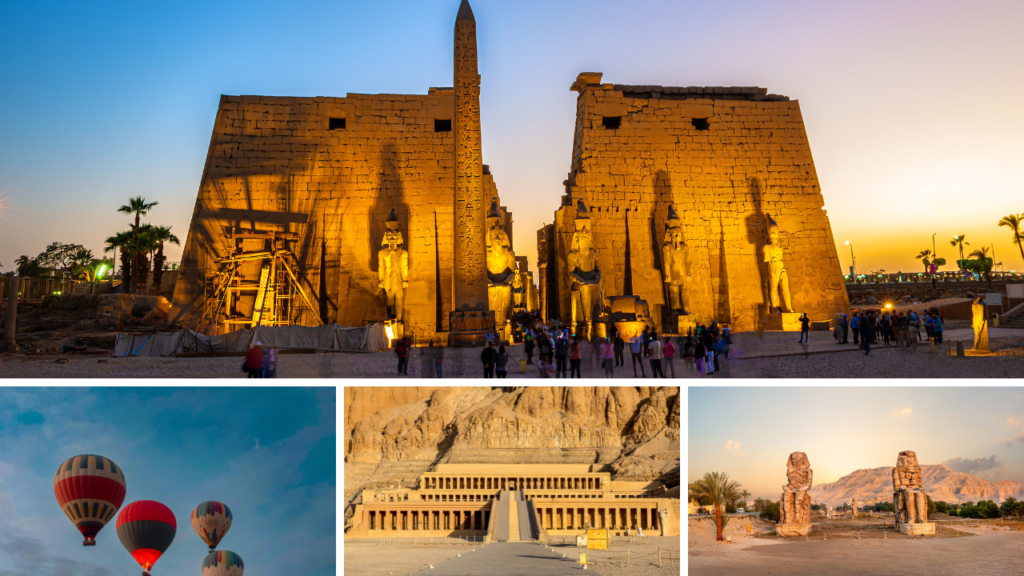
Luxor Temple, illuminated at night, creates a living painting. Its colonnades glow with golden light, while the hum of the modern city resonates in the background. They crowned kings here, they began festivals here, and today it remains the beating heart of Luxor’s East Bank—a place where ancient and modern Egypt stand hand in hand.
Luxor: The West Bank—The Land of Sunset and Eternity
Cross the Nile to the West Bank, and you enter a different world. The air grows still, the mountains rise like ancient guardians, and time seems to slow. This was the land of eternity, where pharaohs prepared for the afterlife.
The Valley of the Kings stretches deep into desert hills, its tombs carved with stories of creation, rebirth, and divine protection. Entering the painted chambers of Seti I, Ramses VI, or Tutankhamun feels like stepping inside a secret world preserved by silence and sand. The colors are astonishing—blues, reds, and golds untouched by the centuries.
Hatshepsut Temple stands in perfect harmony with the cliffs behind it. Its terraces rise gracefully above the desert floor, telling the story of a woman who ruled Egypt like a king. From its upper level, the view across Luxor is breathtaking—a perfect meeting point between mountain, sky, and river.
The Colossi of Memnon, two colossal statues more than 3,000 years old, still greet travelers at the entrance to the West Bank. Weathered yet strong, they watch over fields of sugarcane and golden light and seem to whisper to the river and mountains that surround them.
Things to Do in Luxor
Karnak Temple
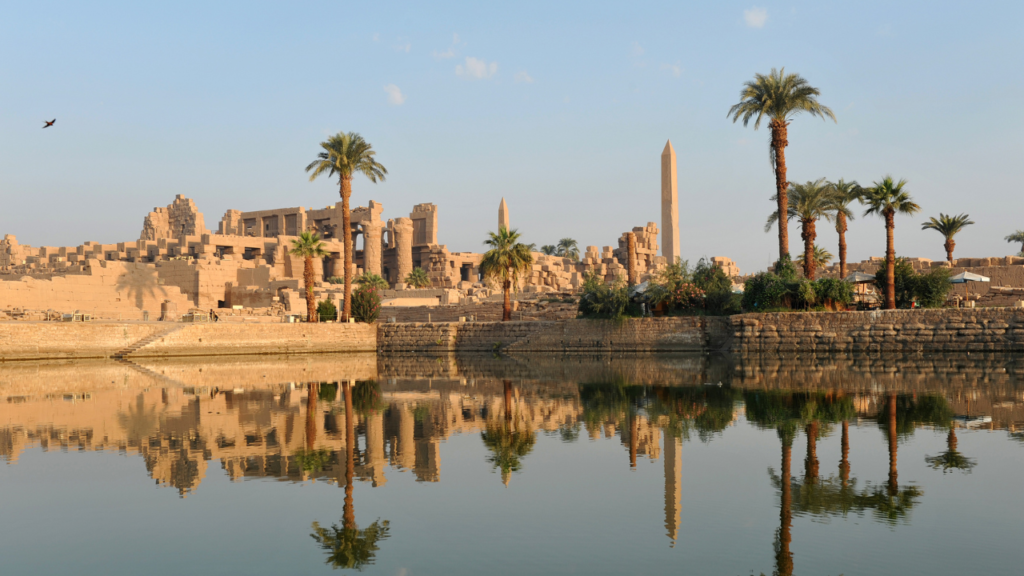
offers one of the most unforgettable mornings in Egypt. As sunlight enters the Hypostyle Hall, the columns glow softly, and the reliefs come alive. Wander through the court of Ramses II, follow the sacred processional way, and imagine priests moving through the temple at dawn, carrying offerings to the gods.
Luxor Temple
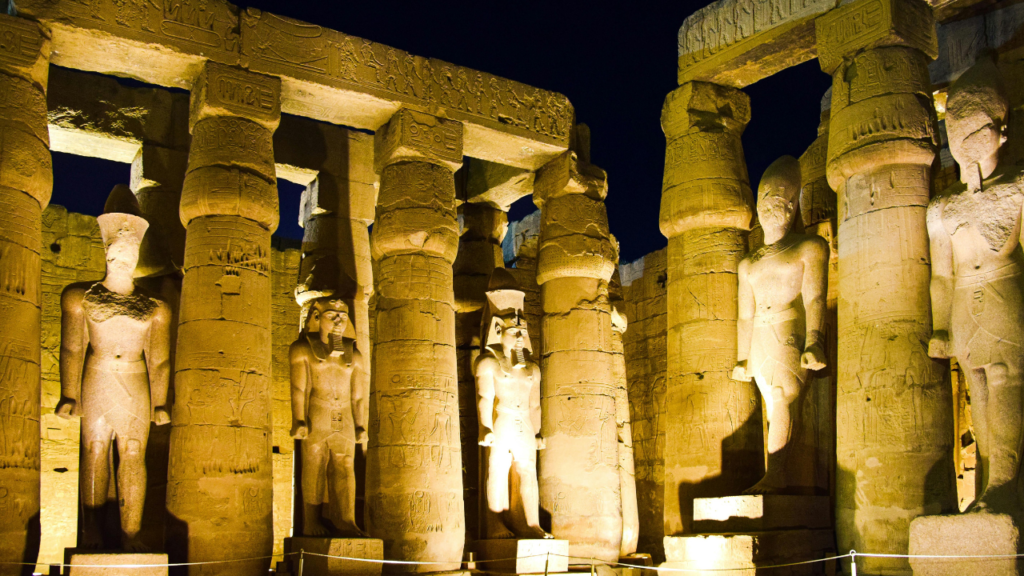
The Luxor Temple is magical at sunset and even more spectacular at night. The golden lights make its colonnades shimmer, creating a bold contrast between the soft evening air and the strength of ancient stone. It is a place where modern life flows around ancient history, blending sound, movement, and memory.
The Valley of the Kings
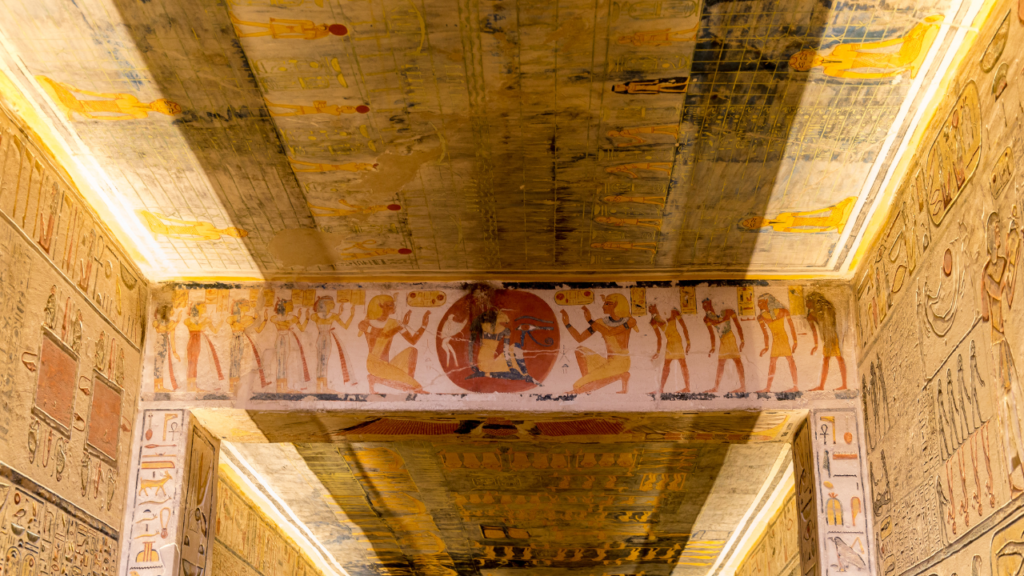
Reveals the true power of ancient craftsmanship. Inside each tomb, the ceilings shine with stars, and the walls glow with scenes guiding the pharaoh through the afterlife. Visiting these tombs allows travelers to step into a world of belief, beauty, and extraordinary precision.
The Temple of Hatshepsut
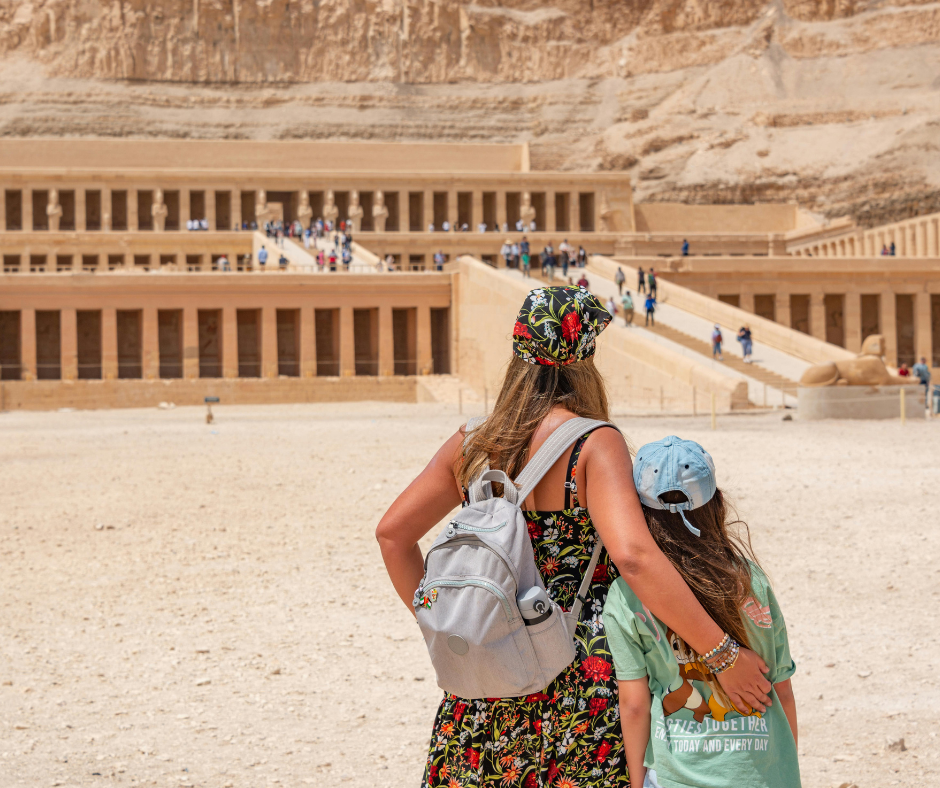
A masterpiece of symmetry and storytelling. Each terrace reveals reliefs of her divine birth, her trading expeditions, and her remarkable leadership. Standing here, you feel the strength of a kingdom ruled by a woman ahead of her time.
The Colossi of Memnon
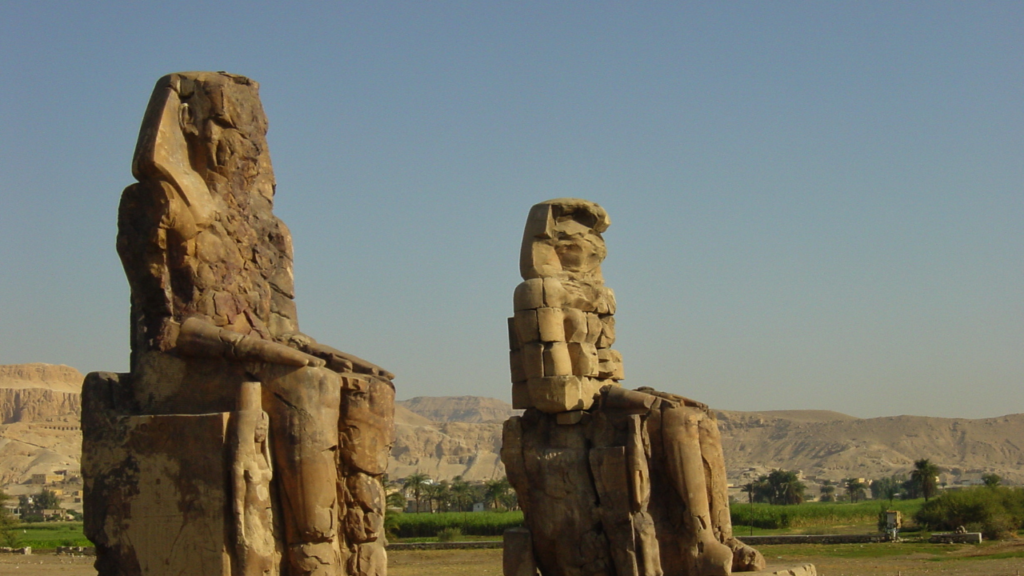
Offer a moment of reflection. Their silent presence echoes the grandeur of ancient Thebes. They face the sunrise, watching over fields, workers, and mountains—a reminder that Luxor has always been a living landscape.
Hot-Air Balloon
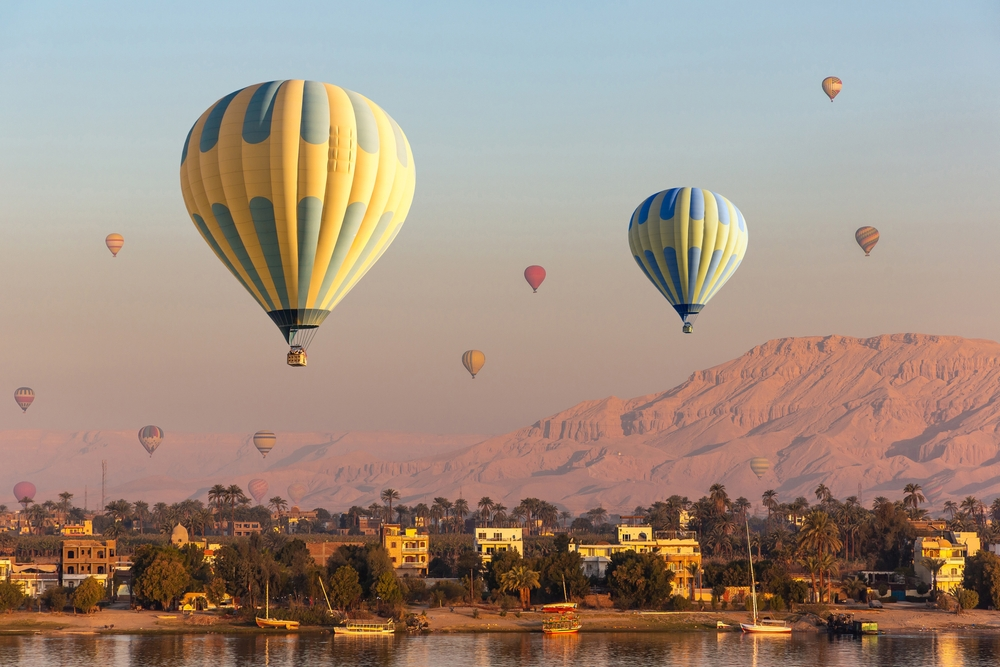
Hot-Air Balloon at Sunrise is one of Luxor’s most breathtaking experiences. Drifting silently over the Nile, you see the entire city spread beneath you—green fields on one side, desert cliffs on the other, and the river shining between them. From the sky, Luxor becomes a perfect map of life and eternity.
A Nile boat ride brings calm after a long day of exploring. The river glows with colors of mango, rose, and gold as the sun sets. The breeze softens, the water whispers, and Luxor feels timeless, quiet, and beautifully alive.
The Luxor Museum and the Mummification Museum
offer peaceful spaces to admire statues, jewelry, and artifacts with incredible clarity. These museums provide context, meaning, and a deeper understanding of everything travelers see outdoors.
Deir el-Medina
The ancient village of royal tomb builders shows the human side of Thebes. Here you walk among the homes of artists, explore intimate tombs painted with family scenes, and read the personal stories of the people who built Egypt’s immortality.
Medinet Habu and the Ramesseum
reward curious travelers with vivid colors, towering pylons, and quiet courtyards. These temples hold a powerful atmosphere—less crowded, deeply evocative, and rich with historical detail.
Luxor’s markets and cafés
Luxor’s souks and cafés bring warmth and local life into your journey. A cup of mint tea, a conversation with a shopkeeper, the scent of spices, and the hum of evening prayers create moments that feel both personal and unforgettable.
Why Is Luxor Famous?
As a complete Luxor travel guide, this article highlights the city’s top attractions, history, and travel tips. Luxor is famous for its temples, royal tombs, and exceptionally preserved monuments of ancient Thebes. It is often called the world’s greatest open-air museum because visitors can walk among thousands of years of history in one place.
Best Time to Visit Luxor
This Luxor travel guide recommends visiting between October and April for the best weather and sightseeing conditions.
Is Luxor Safe for Tourists?
Yes, Luxor is considered safe for tourists. It is one of Egypt’s most visited destinations, with strong security in tourist areas, professional guides, and organized tours. Like anywhere, basic travel precautions are recommended. In this Luxor travel guide, safety tips and travel advice are included to help visitors plan confidently
Luxor Awaits
Luxor is a place where sunrise meets eternity. It is where temples rise from fertile fields, tombs rest beneath desert mountains, and the Nile connects life with history. Whether you come for culture, photography, or adventure, Luxor will leave you with memories that feel eternal. With this Luxor travel guide, planning your journey to Egypt’s open-air museum becomes easy, inspiring, and unforgettable.